Abhivir Singh
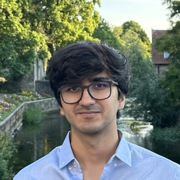
I build AI agent systems, and the harnesses underneath them.
At Fetch.ai I was the only engineer on a platform that turns a sentence about a dataset into a trained model. Version one was a fixed pipeline and it worked on every dataset I had tested it on, which was the tell. I rebuilt it as nine agents under a supervisor, with logging on every call, guardrails and evals, because I could not debug the thing I had. Seven Dockerised services by the end.
I found out afterwards that the industry had names for most of it. On Imperial's NLP leaderboard I measured the thing directly: working by hand I came 10th of 340, my agent system running unsupervised came 22nd, and the two together came 1st.
22, from Faridabad. MEng Computing (AI and Machine Learning) from Imperial, First Class Honours. Before that, a year at IIT Delhi.
Experience
- Fetch.ai AI Engineer, Innovation LabApr – Sep 2025
- DeepSearch Labs Machine Learning EngineerJan – Mar 2025
- Imperial College London AI Research, then MEng thesis at BioMedIAOct 2024 – Jun 2026
- Imperial College London Undergraduate Teaching AssistantOct 2024 – Mar 2025
- Govt. of Uttarakhand Software Engineer, Dept. of Rural DevelopmentJul – Sep 2024
- Optiver Quantitative Trader, Trading AcademyNov – Dec 2023
Highlights
See all highlights →
Imperial College London →
2022–2026MEng Computing (AI and Machine Learning). First Class Honours, and four rising years: 63.7, 67.7, 71.9, 73.3.
academic
YC Top 25: Dinner with YC Partners
Apr 2026YC Startup School in Bengaluru. Top 25 of 25,000 builders picked for the dinner with YC partners Jared Friedman, Jon Xu, Ankit Gupta, and Arnav Sahu (Peak XV).
event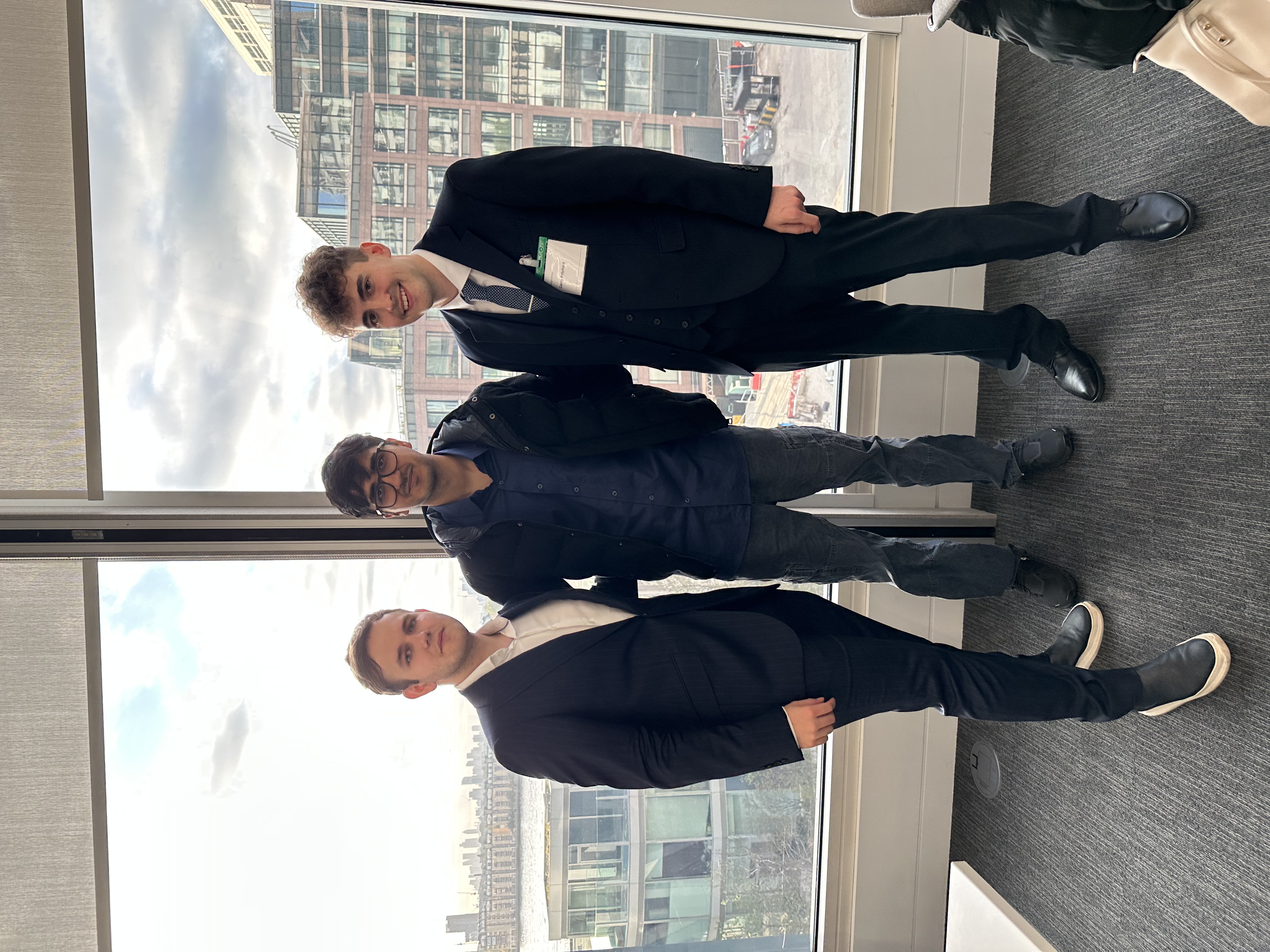
Morgan Stanley: 1st Place
2025Arbitrage challenge. Manual trading and quantitative reasoning rounds.
competition
Imperial Cricket Captain →
2023–2025Led the team in BUCS. Scored a 100, earned the baggy blue cap. Batting avg: 81.
leadership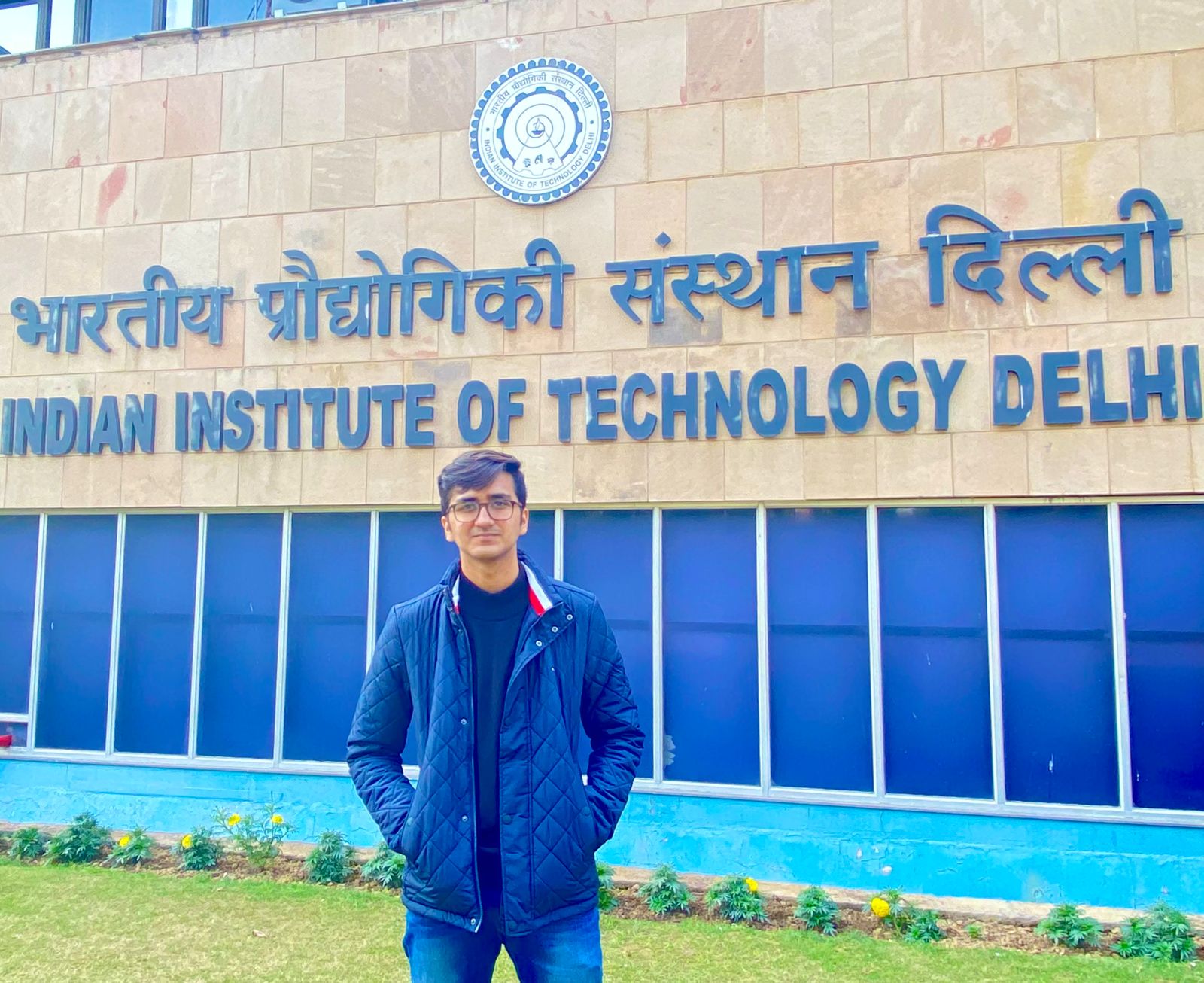
IIT Delhi
2021–2022JEE Advanced, All India Rank 723. A year of Biochemical Engineering and Biotechnology, then I left to start again at Imperial and study AI.
academicFeatured Work
See all work →AI Data Science Platform →
Apr – Sep 2025Solo-built platform with nine AI agents that coordinate across the full data science pipeline. Humans in the loop at every decision point. Live with data scientists at Fetch.ai.
SemEval: 1st of 340 ↗
Jan – Mar 2026Detecting condescending language at a 9.5:1 class imbalance. By hand, without AI support as the department required, a DeBERTa-v3 model with a community-aware prefix and focal loss: F1 0.59 on the dev set against a 0.48 baseline, 10th of 340, 29 of 30 for the report. Then my agent system on GPT-4o came 22nd unsupervised and 1st with me in the loop.
A Context Layer With Provenance
Oct 2025 – nowAbout 10,000 pages of everything I read, write and build, indexed as a knowledge graph with provenance on every item rather than a flat vector index. Hybrid retrieval over BM25, on-device embeddings and a pgvector HNSW backend, with roughly 30 MCP tools on top so agents read and write the same memory I do.
AI for Fetal Heart Ultrasound ↗
Oct 2025 – Jun 2026MEng thesis. A controlled backbone swap on 4,128 fetal ultrasound subjects, training no new model. Holding the head fixed, domain pretraining adds 0.053 to 0.086 AUROC, and FetalCLIP with a transformer head reaches 0.911. At a 0.20 screening threshold that model does worse than referring nobody on all five folds, while the DINOv2 linear probe does better on all five. The model that wins the ranking loses the decision.
Pintos OS & WACC Compiler →
2023–2024An operating system in C and a compiler in Scala, both from scratch, in second year. 91.19 across the 15-credit module. The year after, I was paid to teach it: three two-hour labs a week, twenty students.
Emotional Text-to-Speech →
Winter 2024/25Fine-tuned open-source TTS to express emotion. Compiled an emotional audio dataset with 7,000+ HuggingFace downloads.
GPT from Scratch
Oct – Dec 2024Transformer language model built from scratch, following Karpathy's NanoGPT. Multi-head self-attention, BPE tokenizer, training and inference.
MEGA: Multilingual LLM Evaluation ↗
Oct – Dec 2024Evaluating LLMs across 70 languages and 21 families. Found that Tamil and Malayalam cost 10 to 12 tokens where English costs 2 to 3, so a per-token price is a tax on the languages it is hardest to serve.
Right Now
What I'm up to →Graduated from Imperial. Building AI agents and the harnesses around them. In India, working out where to do the next serious thing.
Get in Touch
I read everything that comes in.